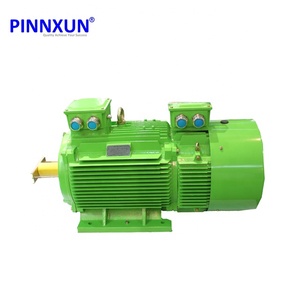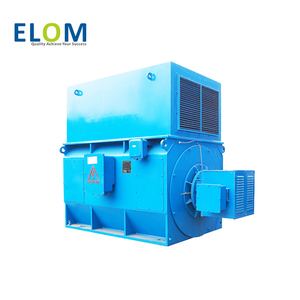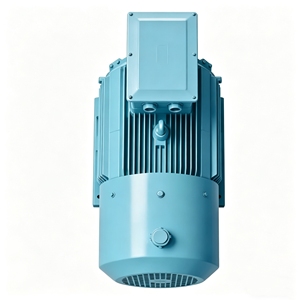





Explore our custom-engineered high voltage, slip-ring, and industrial asynchronous induction motor retrofits tailored for seamless mechanical drop-in and electrical matching across U.S. industrial sites.
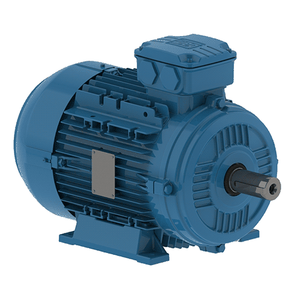
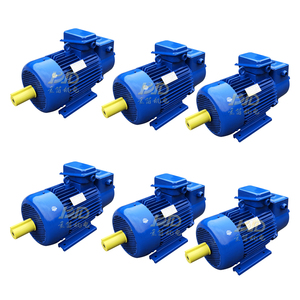
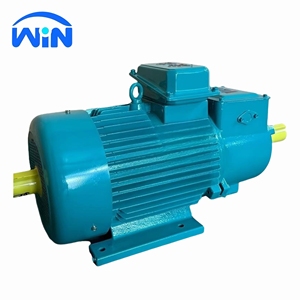
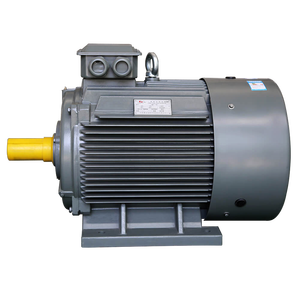
An authoritative engineering analysis on overcoming legacy equipment obsolescence, minimizing structural CAPEX, and optimizing power density across North American industrial infrastructure.
Across the United States manufacturing, petrochemical, mining, and utility landscapes, heavy industrial operators face a critical infrastructure dilemma: aging medium and high voltage AC induction motors installed between 1970 and 2000 are approaching the end of their operational lifecycle. Replacing these large-frame machines (ranging from 2.3kV, 4.16kV, to 6.6kV and 13.8kV ratings) via standard OEM catalog replacements often incurs catastrophic civil engineering expenses, foundation modifications, pipeline realignment, and prolonged facility shutdown.
As a leading high-voltage electric motor retrofitting exporter and manufacturer dedicated to the U.S. market, our engineering philosophy centers on 100% mechanical and electrical drop-in replacement fidelity. Retrofitting is not merely rewinding or cosmetic overhauling; it is a full-scale reverse engineering and remanufacturing discipline governed by strict NEMA MG1, IEEE 841, IEEE 1415, and API 541/547 standards.
When an existing legacy high-voltage motor (such as an obsolete Westinghouse, General Electric, Reliance, or Parsons Peebles machine) fails, simply specifying a modern frame size creates massive structural friction. Modern motors utilize higher magnetic flux densities and optimized slot geometry, resulting in significantly smaller frame footprints. Installing a modern standard frame onto a legacy bedplate requires costly transition bases, custom shaft extension couplings, and recalculations of torsional vibration dynamics.
Our engineered retrofitting process solves this through structural frame mirroring:
To quantify the financial and operational impact of high-voltage motor retrofitting for U.S. industrial facilities, consider the comparative analysis below derived from real-world Gulf Coast refinery and Midwest mining plant upgrade projects:
| Engineering Evaluation Criteria | Standard OEM Catalog Replacement | TDC Parsons Peebles Custom Retrofit | U.S. Plant Operational Benefit |
|---|---|---|---|
| Civil & Foundation Modifications | Required (Transition plates or recasting concrete base) | Zero Base Modifications (Exact foot-print clone) | Saves $45,000 – $180,000 in civil engineering labor |
| Piping & Alignment Downtime | High (Driven equipment realigned & re-piped) | Direct Drop-In Fitment | Reduces plant commissioning downtime by up to 70% |
| Electrical System Compatibility | Requires updated switchgear & cable routing | Exact Match (Voltage, FLAm starting kVA/hp) | Prevents inadvertent utility breaker tripping during startup |
| Insulation Class & Thermal Reserve | Standard Class F (80°C rise) | Class H VPI Resin (Tested under IEEE 1049) | Extends motor insulation operating life by 200%+ |
| Inrush Current / Grid Surge | Fixed Standard NEMA Code G/H | Tailored Starting Torque vs. Current | Complies with strict U.S. regional utility grid connection limits |
| Total Cost of Ownership (5-Year TCO) | Baseline High CAPEX + Civil Overhead | 35% - 55% Lower Net Cost | Accelerated ROI achieved within 8 to 14 months |
Optimized for regional U.S. power grids, environmental compliance codes, and specialized sector demand.
Explosion-proof and hazardous area high voltage motor retrofits engineered for Class I, Division 2 / Zone 2 environments (Texas, Louisiana, Mississippi). Featuring Ex p purged and pressurized enclosures, anti-corrosive epoxy marine finishes, and API 541 compliance to endure harsh salt-air and chemical vapor conditions.
High-torque YR / YZR series wound rotor induction motors retrofitted for ball mills, primary jaw crushers, and overhead bridge cranes in Ohio, Pennsylvania, and Minnesota. Integrated with heavy-duty slip rings, brush-lifting mechanisms, and liquid resistance starter (LRS) matching for smooth high-inertia acceleration.
Large-scale CACA (Totally Enclosed Air-to-Air Cooled) and CACW (Totally Enclosed Air-to-Water Cooled) motor retrofits driving primary raw water intake pumps and power plant boiler feed pumps. Designed to meet EPACT and U.S. Department of Energy (DOE) premium efficiency mandates.
The U.S. industrial sector is undergoing a major technological shift driven by the Inflation Reduction Act (IRA), federal decarbonization grants, and stringent energy efficiency guidelines set by the DOE. Plant managers are under immense pressure to reduce facility carbon footprints without compromising operational reliability.
Retrofitted high voltage motors play a pivotal role in this transition. By replacing inefficient, aging copper rotors with high-purity die-cast or copper bar fabrications, and re-engineering stator slot fills with low-loss silicon steel laminations, our retrofitted machines achieve up to 2.8% energy efficiency improvements over original legacy specs. For a continuous-duty 5,000 HP motor operating at 4.16kV, this efficiency gain translates to over $68,000 in annual electricity cost savings based on current U.S. industrial kilowatt-hour tariffs.
Over 128 years of British engineering authority, combined with advanced high-voltage testing facilities and ISO quality standards.
Our manufacturing facilities adhere strictly to ISO 9001 quality frameworks, ISO 14001 environmental management, and SGS Baseefa ATEX/IECEx hazardous location certifications, ensuring rigorous quality assurance for critical exports.
Every retrofitted motor undergoes extensive factory testing prior to transatlantic dispatch: No-load testing, direct load testing, back-to-back testing, partial discharge analysis, and core flux testing up to 13.8kV electrical capacity.
With historical engineering drawings and winding data spanning more than 12,000 manufactured machines (including Parsons Peebles, TDC, Electric Products Cleveland Ohio, and legacy OEM designs), we guarantee exact dimensional fidelity.
Addressing key technical, logistical, and compliance inquiries regarding high-voltage motor retrofitting for American industrial facilities.
We do not supply off-the-shelf IEC motors with adapter plates. Instead, our engineering team custom-fabricates the motor casing, mounting feet, and shaft extension directly to NEMA physical frame dimensions (such as NEMA 5810, 6810, or custom frame sizes). All shaft keys, foot holes, and shaft diameters are machined in fractional imperial dimensions to guarantee 100% drop-in alignment with existing U.S. driven machinery.
Yes. All electrical windings are custom designed for North American grid requirements. Whether your facility operates on 60Hz supply at 2.3kV, 4.16kV, 6.6kV, or 13.8kV, our stuffer packs and slot designs are optimized for maximum power factor, optimal torque curves, and strict adherence to NEMA MG1 voltage variation tolerances (+/- 10%).
Each retrofitted unit is delivered with a comprehensive engineering binder containing: Certified Dimensional Outline Drawings, Factory Acceptance Test (FAT) Reports under IEEE 112, VPI Insulation Dissipation Factor Test Data, Vibration Spectrum Baseline Reports, and (where applicable) Hazardous Area Certification Certificates (ATEX/IECEx/CSA equivalent documentation).
While standard OEM custom high-voltage lead times often stretch between 40 to 60 weeks, our streamlined retrofitting manufacturing workflow delivers completed units in as few as 14 to 20 weeks. Expedited emergency breakdown manufacturing programs are also available for critical U.S. plant outages.
Absolutely. All VFD-duty retrofits incorporate Class H insulation, inverter-grade magnet wire, reinforced turn-to-turn insulation, insulated non-drive-end (NDE) bearings (or grounding rings) to prevent shaft current bearing fluting, and forced ventilation blowers for low-speed continuous torque cooling.