





Engineered for continuous baseline operation, severe tropical conditions, and utility grid backup in heavy industrial complexes across Nigeria.
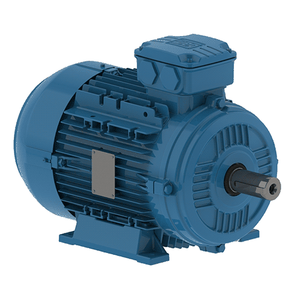
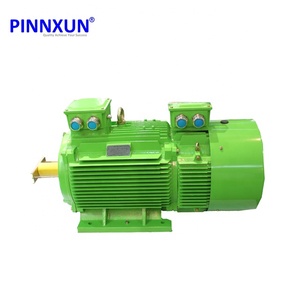
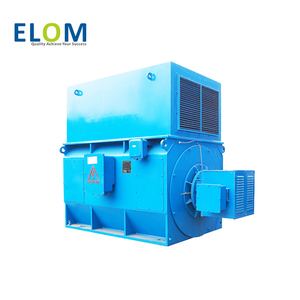
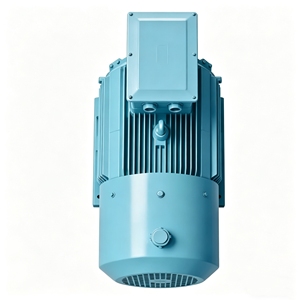
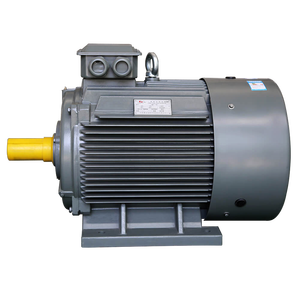
In complex electrical grid environments characterized by significant voltage fluctuations and high demand for localized captive power generation, the engineering design of rotating equipment determines operational continuity. Salient Pole Synchronous Generators stand as the gold standard for low-to-medium-speed applications ranging from 100 RPM to 1800 RPM. Unlike non-salient (cylindrical) rotors engineered specifically for high-speed two-pole thermal steam turbines, salient pole alternators feature projecting magnetic poles bolted or dovetailed onto a heavy steel rotor hub. This structural topology provides unparalleled mechanical strength, superior magnetic flux distribution, and high transient overload resilience under erratic grid conditions.
Salient pole rotors utilize concentrated excitation field windings wound around individual laminated steel pole shoes. This design offers massive inertia (high $GD^2$ moment of inertia), stabilizing engine-driven generators against rotational frequency variations caused by cyclical combustion pulses in reciprocating diesel or natural gas engines.
Embedded within the pole faces are heavy copper damping bars (amortisseur windings) short-circuited at both ends. These damper grids automatically suppress hunting, dampen electromechanical oscillations during sudden load changes, and balance the magnetic field during severe single-phase unbalances common in West African industrial distribution feeds.
Equipped with brushless AC exciters and dual-channel digital Automatic Voltage Regulators (AVR), our salient pole synchronous generators achieve dynamic voltage regulation within ±0.5%. They handle heavy motor-starting surge currents (up to 300% rated current for 10 seconds) without tripping or destabilizing the internal power net.
Nigeria represents Africa’s largest economy, yet its commercial enterprises, oil & gas extraction sites, cement processing plants, and municipal infrastructures face chronic grid instability. With an installed capacity of roughly 13,000 MW but an operational transmission delivery that frequently hovers between 4,000 MW and 5,000 MW, major industrial operators in Lagos, Ogun (Agbara, Sagamu), Port Harcourt, Kano, and Kaduna rely heavily on heavy-duty captive generation.
Exporting heavy rotating equipment to Nigeria requires specific engineering modifications to withstand ambient operating temperatures exceeding 45°C, extreme relative humidity (up to 95% in coastal regions), and heavy ambient dust in northern industrial hubs during the Harmattan season.
In the Niger Delta (Port Harcourt, Warri, Escravos), salient pole generators driven by gas turbines or dual-fuel engines generate power from flared natural gas. Rated for ATEX / IECEx Hazardous Zone 2 (Ex ec / Ex p), these generators power artificial lift pumps, crude oil refining trains, and gas processing compressors continuously.
Large cement manufacturing complexes in Ogun, Kogi, and Cross River states utilize high-power synchronous generators (5MW to 30MW per unit) coupled with heavy diesel engines to drive ball mills, crushers, and rotary kilns, absorbing massive load steps without voltage collapse.
In Central and Northern Nigeria (Taraba, Kaduna, Plateau), small hydro schemes leverage low-speed salient pole synchronous generators coupled with Francis or Kaplan hydraulic turbines to inject stable renewable power into rural microgrids.
Private IPPs serving industrial clusters (such as Lekki Free Zone) deploy multi-megawatt salient pole generator sets operating in parallel synchronization, providing continuous 50Hz power to manufacturing factories.
Selecting the correct generator technology is critical for long-term return on investment, operational reliability, and life-cycle maintenance costs. Below is an authoritative technical comparison matrix designed by senior electrical rotating machinery specialists:
| Technical Criterion | Salient Pole Synchronous Generator | Non-Salient Pole (Cylindrical) Generator | Induction (Asynchronous) Generator |
|---|---|---|---|
| Operating Speed Range | Low to Medium Speed (100 - 1800 RPM) | High Speed (1500 - 3600 RPM) | Sub-synchronous / Variable Speed |
| Prime Mover Compatibility | Diesel Engines, Gas Engines, Hydro Turbines | High-Speed Steam & Heavy Gas Turbines | Wind Turbines, Small Auxiliary Units |
| Rotor Construction | Projecting laminated poles with field coils | Solid steel cylinder with milled slots | Squirrel cage or wound slip-ring rotor |
| Transient Reactance ($X'_d$) | Optimized for high motor-starting torque | Low reactance for transmission grid stability | High reactive power demand from grid |
| Reactive Power (VAR) Support | Full Leading/Lagging Power Factor Control | Full Power Factor Control | Requires external capacitor bank / VAR source |
| Mechanical Inertia ($GD^2$) | Very High (Stable under pulsed engine torque) | Moderate to Low | Low |
| Maintenance & Field Coil Access | Direct individual pole removal in-situ | Requires full rotor removal & slot wedge repair | Low maintenance, but lower flexibility |
Carrying the heritage of global engineering giants such as TDC Parsons Peebles, our manufacturing facilities produce heavy electrical rotating equipment built to withstand the harshest environments on earth.
We offer 100% Drop-In Replacement Engineering for obsolete legacy generators installed decades ago in West Africa. Our design team recreates identical shaft centerlines, foot dimensions, terminal box locations, and cooling duct orientations to allow seamless installation without modifying existing civil foundations or mechanical couplings.
Key technical, regulatory, and logistics insights for engineering leads, plant managers, and procurement officers importing industrial generators into Nigeria.
Our generators are built with heavy-duty amortisseur (damper) copper circuits integrated into the rotor pole faces. This construction allows the generator to withstand continuous negative-sequence currents ($I_2$) up to 10% and handle unbalance conditions without localized rotor overheating, ensuring uninterrupted operation despite uneven distribution loads.
Every machine exported to Nigeria is shipped with complete factory test reports (FAT), ISO 9001 quality certificates, Certificate of Origin, SONCAP Product Certificate (PC), and Final Certificate (SC). Electrical parameters are certified to conform to NERC Grid Code frequency (±0.5Hz) and voltage regulation mandates.
Yes. Through reverse engineering and original factory archives, we match shaft dimensions, foot mounting centers, stator voltage, excitation characteristics, and flange interfaces of legacy generators (e.g., older Parsons Peebles, WEG, or GEC machines) so you can drop the new unit directly onto existing concrete pads without expensive civil modifications.
For coastal zones like Lagos or Port Harcourt, we recommend Totally Enclosed Water-to-Air Cooled (CACW / IC81W) or CACA (IC611) configurations featuring VPI-treated Class H insulation. This sealed internal loop prevents salt-laden damp air or Harmattan dust from contacting electrical windings.
We supply comprehensive 2-year operational spare parts kits (including spare AVR modules, rotating diode bridges, bearings, and temperature sensors) alongside every machine. Global technical field engineers are available for onsite commissioning oversight, vibration diagnostics, and emergency repair across West Africa.
Standard production cycles for engineered salient pole alternators (500kW to 15MW) range from 12 to 20 weeks depending on power rating, voltage class, and cooling specifications. Accelerated manufacturing slots and sea freight shipping directly to Lagos (Apapa/Tin Can) or Onne Port are coordinated by our export logistics desk.
Speak directly with our senior rotating equipment engineers to discuss technical specifications, drop-in replacement dimensions, SONCAP compliance, and custom quote requirements for your installation in Nigeria or worldwide.