

The Czech Republic stands as one of Europe’s premier industrial powerhouses, characterized by a high concentration of heavy manufacturing, metallurgy, automotive engineering, mining, and energy generation. Across industrial hubs ranging from the Moravian-Silesian Region (Ostrava, Třinec) to North Bohemia (Ústí nad Labem, Most) and the manufacturing corridors of Plzeň and Brno, the operational reliability of heavy rotating machinery is central to industrial output.
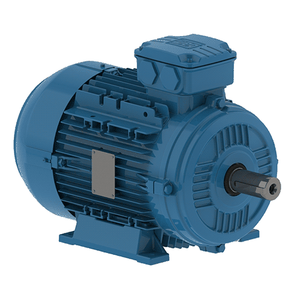
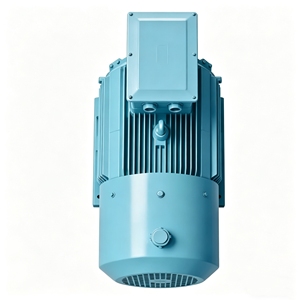
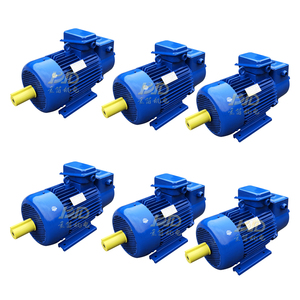
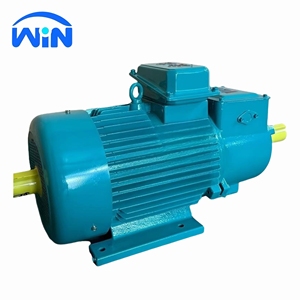
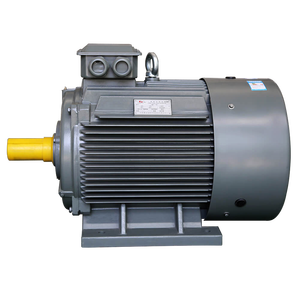
Unlike standard squirrel-cage induction motors, Wound Rotor Induction Motors (WRIMs)—commonly referred to as slip ring motors—occupy a critical technological niche. They provide unmatched starting torque characteristics under heavy loads while maintaining low inrush current. This technical capability makes them irreplaceable for high-inertia equipment such as raw material crushers, ball mills, heavy blast furnace blowers, long-distance mining conveyors, and portal hoisting equipment across Central Europe.
However, procuring and maintaining heavy-duty wound rotor induction motors within the Czech Republic market presents distinct technical and logistical challenges. Factory procurement managers, electrical engineers, and EPC contractors frequently grapple with aging legacy machines installed during previous industrial eras (such as old MEZ Mohelnice or legacy CMEA designs), strict European Union Eco-design energy requirements, grid compliance regulations under ČSN EN standards, and severe mechanical wear in high-vibration, dust-laden operational environments.
Inserts external resistance into the rotor circuit during startup to limit grid voltage dips below strict Czech regional utility thresholds (ČEZ, E.ON distribution networks).
Delivers starting torque up to 250-300% of full-load torque (FLT) at rated rotor resistance, enabling smooth startup under 100% loaded conditions in cement and steel mills.
Transfers heavy startup thermal energy away from the internal motor windings to external liquid resistance starters (LRS), preserving motor insulation life.
Understanding the geographical distribution of heavy industry in the Czech Republic is crucial for tailored equipment sourcing. Our slip ring and wound rotor AC motor lines (ranging from 380V low-voltage units up to 10kV high-voltage configurations) are engineered specifically for the operational demands of Czech facilities.
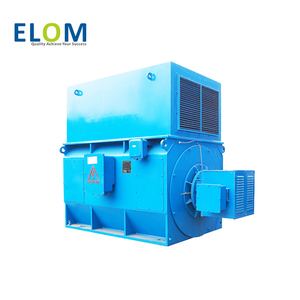
In the steel manufacturing corridors of Moravia-Silesia, rolling mills and heavy blast furnace blowers require prime movers that can withstand frequent reverse rotations, high ambient heat, and extreme surge loads. Motors such as the YZR Wound Rotor AC Motor Series and high-power YR 3200kW IP23 Units are widely deployed to drive continuous casting lines, slab mills, and overhead bridge crane hoists. Their robust cast-iron or heavy fabricated steel frame enclosures ensure structural integrity under intense shock vibrations.
Surface mining operations near Most, Chomutov, and Tušimice rely on continuous long-distance belt conveyors, bucket-wheel excavators, and overburden spreaders. These machines demand high starting torque without exceeding local substation grid capacities. Slip ring motors combined with liquid starters allow progressive resistance cut-out, preventing mechanical shock to heavy gearbox shafts and rubber conveyor belting.
Cement plants utilize heavy horizontal ball mills and primary jaw crushers. Starting a ball mill filled with grinding media and clinker requires an exceptional torque coefficient. Heavy wound rotor induction motors (such as 6kV/10kV 1000kW–3150kW slip ring drives) deliver maximum breakaway torque at minimum current draw, preventing severe line voltage sags in regional distribution networks.
Chemical synthesis plants and petrochemical refineries demand specialized motor protection. For fan drives, gas compressors, and heavy fluid pumps operating in potentially explosive environments, pressurised motor configurations (Ex p) or non-sparking variants (Ex ec) certified to ATEX and IECEx standards are required by Czech workplace safety regulations (SUIP).
Selecting the appropriate rotor topology directly impacts facility capital expenditure, operational lifecycle costs, and power quality compliance. The table below outlines key engineering metrics comparing high-capacity Wound Rotor Induction Motors against standard Cage Motors for heavy industrial service.
| Performance Parameter | Wound Rotor Induction Motor (YR / YZR) | Standard Squirrel Cage Motor (IE2 / IE3) | Impact on Czech Industrial Facilities |
|---|---|---|---|
| Starting Torque Capability | Up to 250% – 300% Full Load Torque | 120% – 180% Full Load Torque | Enables startup under 100% loaded crushers/mills without tripping. |
| Starting Inrush Current | 1.25× to 2.5× Full Load Current | 6.0× to 8.0× Full Load Current | Prevents voltage sags on local ČEZ/E.ON power grid connections. |
| Thermal Stress Distribution | Heat dissipated externally via Liquid Resistor (LRS) | Thermal energy absorbed inside rotor cage bars | Significantly extends motor winding insulation life during frequent starts. |
| Speed & Torque Adjustment | Smooth mechanical rotor resistance control | Requires expensive High-Power VFD system | Reduces initial capex for simple variable-speed fan/pump applications. |
| Replacement Compatibility | 100% Drop-in replacement for legacy MEZ/CMEA frames | Requires structural modification of baseplates | Eliminates costly civil/foundation modifications in older Czech plants. |
The Czech industrial motor sector is undergoing rapid evolution driven by three primary forces: European Eco-design Regulations (Directive 2009/125/EC), national energy transition mandates, and the digital transformation of plant maintenance under Industry 4.0 initiative (Průmysl 4.0).
Many industrial facilities across Ostrava, Pilsen, and Ústí nad Labem operate large machinery installed 30 to 50 years ago. Legacy slip ring motors supplied under historical Eastern European standards (MEZ, Siemens-Schuckert legacy designs) are reaching the end of their operational lifecycle. Plant operators face a choice between rewinding degraded core laminations or procuring modern, highly efficient drop-in replacement units. Modern Wound Rotor Induction Motors manufactured to modern IEC/EN 60034 standards provide higher power density, improved class H insulation systems (with Class B temperature rise limits), and identical shaft heights and foot-mounting dimensions.
To maximize energy efficiency and operational reliability, modern Czech installations combine wound rotor motors with automated liquid resistance starters containing continuous electrode positioning. As the motor accelerates, PLC-controlled servomotors adjust electrode immersion depth in electrolyte solution (soda ash / sodium carbonate), reducing rotor resistance smoothly to zero before short-circuiting the slip rings via integrated motorized contactors.
Czech maintenance engineering teams are increasingly integrating real-time diagnostics into heavy motor installations. Modern wound rotor motors supplied to the region are fitted with:
Consult with our senior electrical application engineers today. Receive comprehensive technical datasheets, full dimensional drawings, and customized quotation proposals for your facility.
Inquire Now