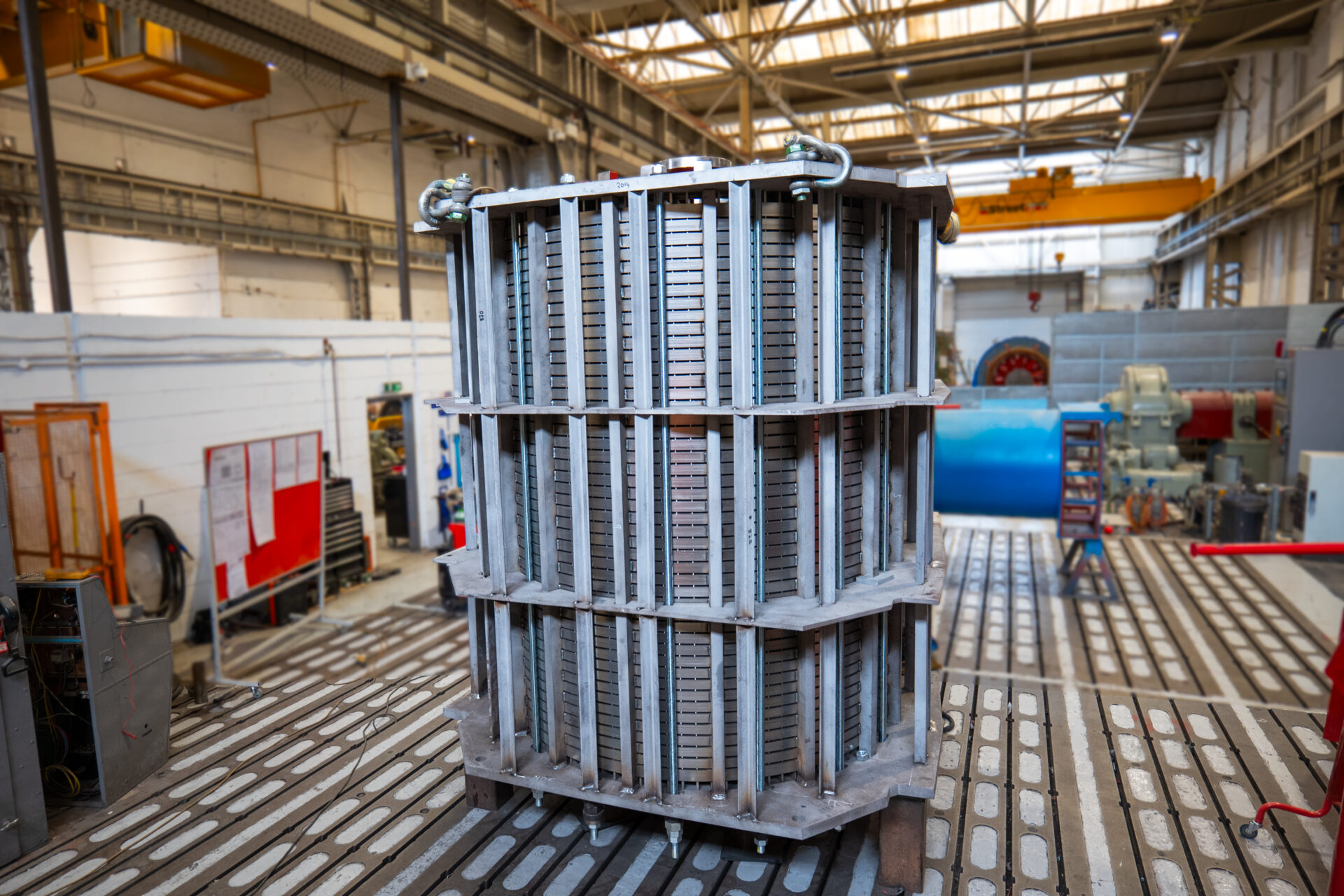
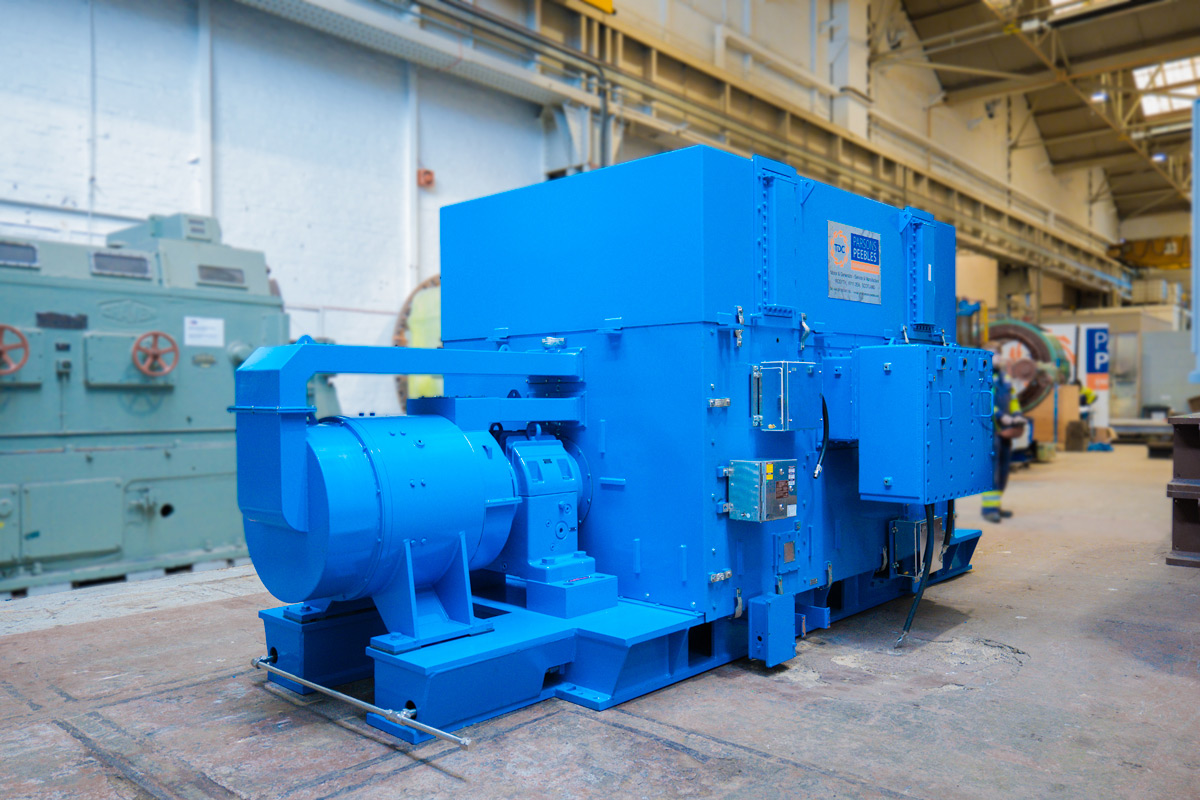
1. Technical Foundations & Fluid Dynamics of Purge System Testing
In heavy processing industries—such as offshore oil & gas production platforms, hydrocarbon refineries, chemical processing facilities, and LNG terminals—electrical machinery often operates in atmospheres where explosive gases, vapors, or combustible dusts are present. Among the recognized protection concepts outlined in international standards, Pressurization "Ex p" (governed by IEC/EN 60079-2 and NFPA 496) remains the primary protection method for large, high-voltage electric motors and high-capacity rotary frequency converters.
The integrity of an Ex p machine relies entirely upon Purge System Testing. Before high-voltage power can be safely applied to the motor windings, any potentially explosive gas mixture that may have accumulated inside the machine frame or enclosure during shutdown must be completely expelled. This process is accomplished by flushing the enclosure with a protective gas—typically clean instrument air or nitrogen—at a certified flow rate for a specified minimum purge time, followed by maintaining a continuous positive overpressure ($\Delta P$) relative to the surrounding external atmosphere.
Key Engineering Insight: Purge Volume Multipliers ($V_p$)
Standard industrial guidelines often quote a default purge requirement of 5 to 10 enclosure volumes. However, under rigorous IEC 60079-2 Type Testing and ATEX verification, the precise minimum purge volume $V_p$ must be empirically verified using gas concentration test procedures (such as oxygen displacement or helium tracer gas analysis). The formula governing required purge air volume is expressed as:
V_p = n \cdot V_{internal}
Where $V_{internal}$ accounts for the net free internal volume of the motor housing including end-shields, cooling ducts, heat exchanger housings (CACA/CACW), and terminal boxes; and $n$ is the empirically validated volume multiplier required to reduce internal explosive gas concentration below 25% of the Lower Explosion Limit (LEL).
During comprehensive Purge System Testing at TDC Parsons Peebles, our test engineers evaluate four crucial dynamic variables:
- Pre-Purge Flow Dynamic Rate ($Q_p$): Verifying that the purging air velocity reaches all internal stagnation pockets, rotor duct channels, and stator winding overhang cavities without creating destructive internal pressure spikes.
- Minimum Overpressure Threshold ($\Delta P_{min}$): Ensuring the system maintains a minimum overpressure of 50 Pa (0.5 mbar) for Ex pz/Ex py applications and up to 100 Pa–250 Pa for Ex px applications under peak operational thermal expansion.
- Maximum Enclosure Pressure Rating ($\Delta P_{max}$): Confirming that structural seals, glass viewports, terminal seals, and shaft labyrinth glands withstand emergency pressure relief valves firing without structural deformation.
- Containment & Leakage Rate ($Q_L$): Measuring air loss during the continuous pressurization phase to optimize protective air consumption rates for operating plant sites.
Rigorous Factory Acceptance Testing (FAT) Parameters
Our dedicated Edinburgh and Rosyth high-voltage testing facilities conduct full-scale purge system performance verification prior to dispatch. We simulate actual site conditions, including severe ambient temperature swings, high wind back-pressures on exhaust outlets, and instrument air pressure drops.
By integrating calibrated mass flow sensors, differential pressure transmitters, and real-time gas analyzers, TDC Parsons Peebles provides absolute certified documentation confirming that every Ex p motor system meets or exceeds ATEX Directive 2014/34/EU and IECEx scheme requirements.
2. Recommended Products & Engineered Ex p Solutions
TDC Parsons Peebles designs, manufactures, tests, and certifies a complete spectrum of heavy-duty rotating electrical machines equipped with integrated purge and pressurization systems. Each machine is engineered for extreme industrial environments, ensuring maximum operational uptime and uncompromised safety compliance.
| Product Category |
Power Range |
Protection Type |
Purge System Testing Capabilities |
Primary Industrial Applications |
| Ex px High Voltage Induction Motors |
200 kW to 15 MW (Up to 13.8 kV) |
Ex px Mb / Gb (Zone 1, Class I Div 1) |
Full high-flow automated pre-purge testing, high-pressure static seal validation, dual leakage rate verification. |
Offshore platform main oil pumps, gas compressor drives, refinery crude distillation pumps. |
| Ex pz / Ex ec Pressurized Motors |
100 kW to 25 MW |
Ex pz Gc / Ex ec (Zone 2, Class I Div 2) |
Simplified continuous dilution testing, internal pressure retention, economic instrument air consumption flow testing. |
Petrochemical booster fans, seawater cooling pumps, power plant draft fans. |
| Salient Pole Ex p Synchronous Generators |
1 MVA to 50 MVA |
Ex px / Ex pz pressurization |
Complex rotor/stator cavity flow pattern mapping, dual-chamber purge balancing, slip ring housing purge validation. |
Offshore FPSO power generation, gas turbine generator sets, hazardous area cogeneration plants. |
| Integrated Purge & Pressurization Control Skids |
Universal Fit for all frame sizes |
ATEX / IECEx certified Control Panels |
Automatic flow control, spark arrestor pressure drop testing, fail-safe isolation trip loop validation. |
Retrofit projects, OEM custom motor builds, hazardous area skid packages. |
Synchronous Generators & Ex p Enclosure Systems
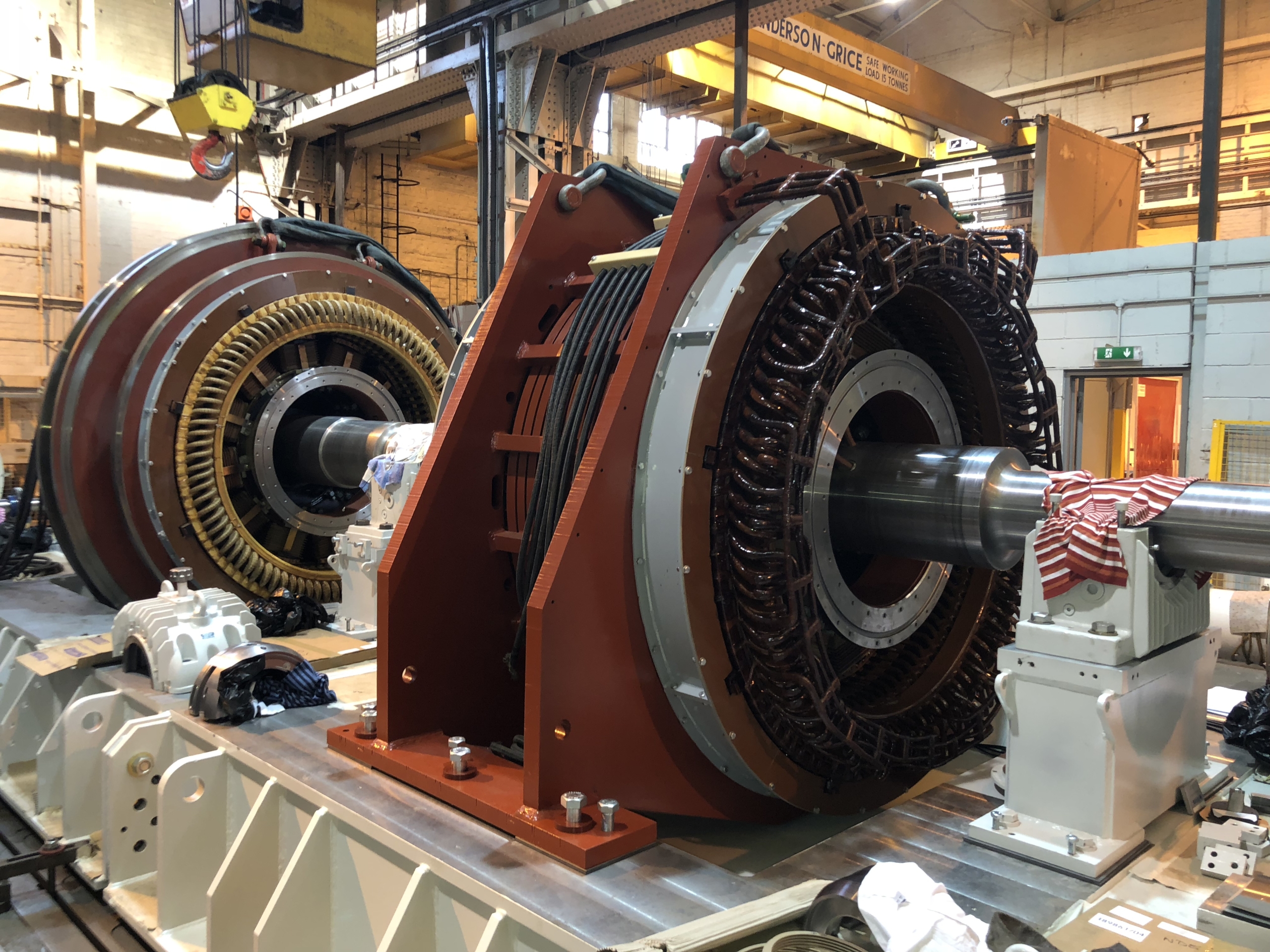
Large synchronous generators operating in hazardous offshore atmospheres require specialized purge system architectures. Our engineers implement multi-point purge manifolds to prevent localized gas trapping in complex salient pole rotor assemblies and brushless exciter housings.
During Purge System Testing, we measure purge air distribution across all internal zones to guarantee that no stagnant pockets remain before electrical energization can take place.
Custom Rotary Frequency Converters with Hazardous Area Protection
In addition to motors and generators, TDC Parsons Peebles is a global authority in Rotary Frequency Converters (RFCs). For naval dockyards, commercial marine, and specialized industrial plants operating in classified environments, we build RFC systems ranging from 300 kVA to over 20 MVA total installed output.
3. Global Procurement Trends & Technological Future of Purge System Testing (2025–2035)
As global energy companies, EPC contractors, and heavy industrial plant operators move toward digital transformation, decarbonization, and remote autonomous operations, the procurement specifications for Ex p machinery and Purge System Testing are undergoing a significant shift. Buyers no longer evaluate purge systems purely as static mechanical hardware; instead, they demand smart, energy-efficient, and predictive safety ecosystems.
Trend 1: Smart IoT-Enabled Dynamic Purge Monitoring
Traditional Ex p purge systems rely on fixed mechanical timers and pneumatic flow switches. Emerging global procurement tenders now mandate digital, IIoT-connected purge control units (APCU). These systems continuously monitor differential pressure ($\Delta P$), ambient temperature, humidity, and gas concentration via optical sensors. During normal operation, the smart controller dynamically throttles instrument air consumption while maintaining the target overpressure, cutting compressed air operating costs by up to 60%.
Trend 2: Hydrogen-Economy Preparedness (Gas Group IIC Validation)
With the rapid rise of clean hydrogen fuel production, ammonia processing, and green chemical plants, equipment specifies protection against Gas Group IIC (Hydrogen / Acetylene), which has extremely low ignition energy thresholds and high flame propagation speeds. Purge System Testing for Group IIC Ex p machines requires stricter volume purge multipliers ($n \ge 10$), ultra-tight seal tolerances, and specialized spark arrestors certified to prevent any hot particle egress during pre-purge discharge.
Trend 3: Predictive Maintenance & Dynamic Seal Leakage Analytics
Unplanned downtime in offshore or refinery applications can cost operators hundreds of thousands of dollars per hour. Procurement teams are specifying purge controllers capable of measuring real-time leakage rates ($Q_L$). Sudden increases in instrument air consumption indicate degradation of shaft labyrinth seals, terminal box gaskets, or inspection door seals. Plant operators receive automated alerts to schedule maintenance long before an enclosure pressure loss triggers an emergency high-voltage motor trip.
Trend 4: Modular "Plug-and-Play" Pre-Tested Skid Packaging
To accelerate site commissioning, EPC contractors increasingly favor complete, pre-tested motor and purge skid assemblies. TDC Parsons Peebles delivers fully integrated drop-in replacement packages where the motor, purge unit, spark arrestors, pressure relief valves, and hazardous area terminal boxes undergo complete factory purge testing as a unified system before shipment.
4. Enterprise Strengths & E-E-A-T (Experience, Expertise, Authoritativeness, Trustworthiness)
Founded in 1896, TDC Parsons Peebles brings over 128 years of unbroken British engineering heritage to the global power generation, electrical manufacturing, and repair sectors. Our deep technical mastery in high-voltage rotating electrical equipment is backed by world-class manufacturing plants in Rosyth and Birmingham, UK, as well as our international service network.
128+ Years Engineering Legacy
Over a century of continuous innovation in heavy electrical machine design, motor rewinds, and hazardous area explosion protection systems trusted by tier-1 global operators.
ATEX & IECEx Certification
Certified by notified bodies such as SGS Baseefa for Ex p, Ex ec, Ex e, and Ex d equipment. Full compliance with EN/IEC 60079-0, 60079-2, and 60079-7 safety standards.
100% Drop-In Replacement Precision
Engineered to duplicate existing mechanical footprint, shaft height, flange dimensions, and electrical parameters, eliminating costly plant downtime and civil modifications.
Quality Accreditations & Rigorous Standards Compliance
Every Ex p machine and purge system test protocol executed in our facilities adheres to certified ISO 9001 quality management systems and international industry accreditations.
6. Frequently Asked Questions: Purge System Testing & Ex p Equipment
Address common technical and procurement queries regarding Purge System Testing, regulatory compliance, and operational best practices.
Q1: What is the primary purpose of Purge System Testing on Ex p electric motors?
The main objective of Purge System Testing is to verify that any explosive gas or vapor present inside the motor enclosure is flushed out before high-voltage electrical power is applied to the machine. Testing validates that the purge air volume ($V_p$), flow rate ($Q_p$), and minimum overpressure ($\Delta P_{min}$) meet strict IEC/EN 60079-2 standards, ensuring safe operation in Zone 1, Zone 2, Class I Division 1, or Class I Division 2 hazardous locations.
Q2: How is the required pre-purge duration calculated for high voltage motors?
Pre-purge duration ($t_p$) is calculated by dividing the total required purge gas volume ($V_p = n \cdot V_{internal}$) by the measured minimum purge flow rate ($Q_{min}$). For example, if a motor enclosure has an internal free volume of $4.0 \text{ m}^3$, a certified volume multiplier of $n = 5$, and a verified purge flow rate of $1.0 \text{ m}^3/\text{min}$, the minimum purge time is:
t_p = (5 \times 4.0 \text{ m}^3) / 1.0 \text{ m}^3/\text{min} = 20 \text{ minutes}
A safety margin (typically 10-20%) is added to account for potential site supply pressure fluctuations.
Q3: What are the differences between Ex px, Ex py, and Ex pz purge protection types?
Standard IEC 60079-2 defines three distinct levels of pressurization based on the equipment protection level (EPL) and zone classification:
- Ex px: Reduces the interior classification of an enclosure from Zone 1 (Class I Div 1) to non-hazardous. Requires automatic power disconnection (trip) upon loss of pressurization.
- Ex py: Reduces the interior classification from Zone 1 to Zone 2 (Class I Div 2). Internal components must be rated for Zone 2. Alarm mandatory upon pressure loss.
- Ex pz: Reduces interior classification from Zone 2 to non-hazardous. Alarm mandatory upon pressure loss, but automatic trip is generally optional based on plant risk assessment.
Q4: What instrument air quality standards are required for Ex p purging systems?
To prevent moisture condensation, oil contamination, or conductive particulate buildup on high-voltage stator windings, purge gas must comply with ISO 8573-1 Class 2.4.2 or better:
- Particles: Class 2 (Max particle size $\le 1 \mu\text{m}$, concentration $\le 1 \text{ mg/m}^3$).
- Water Dew Point: Class 4 (Dew point $\le +3^\circ\text{C}$, or at least $10^\circ\text{C}$ below minimum ambient operating temperature).
- Oil Content: Class 2 (Total oil content $\le 0.1 \text{ mg/m}^3$).
Q5: Can TDC Parsons Peebles perform retrofits and onsite Purge System Testing for legacy machines?
Yes. TDC Parsons Peebles specializes in retrofitting modern digital purge systems onto legacy high-voltage motors and generators of any OEM manufacture. Our field service engineers conduct full site surveys, mechanical seal modifications, manifold installation, and onsite certified Purge System Testing to restore compliance with current ATEX and IECEx standards.
Q6: What happens during a loss of purge pressure while an Ex px motor is running?
For Ex px systems in Zone 1, standard safety interlocks require an immediate automated power trip of the motor high-voltage breaker, unless an engineered risk assessment demonstrates that an immediate trip poses a greater hazard than controlled plant shutdown. In such cases, an immediate audible and visual alarm is raised while plant operators initiate emergency shut-down sequences.
Q7: Why is spark arrestor testing essential on purge system exhaust outlets?
During the pre-purge phase, air discharging from the motor enclosure exits into the surrounding external hazardous atmosphere. Spark arrestors fitted to exhaust ports act as flame/particle barriers. Testing verifies that exhaust air pressure drop remains within design limits while ensuring no hot glowing carbon particles or electrical arcs generated internally can ignite surrounding gas clouds.
Q8: How does continuous dilution purge testing differ from leakage compensation purge testing?
In Leakage Compensation, after the pre-purge cycle is complete, the exhaust valve closes and the purge unit supplies only enough air to compensate for seal air losses, maintaining static overpressure. In Continuous Dilution, a constant air flow is maintained through the enclosure continuously during operation. Continuous dilution is used when internal gas sources (such as fuel gas seals in compressor drives) might release flammable gas during normal operation.
Q9: What documentation is provided following Factory Acceptance Testing (FAT) of an Ex p motor purge system?
TDC Parsons Peebles provides a comprehensive ATEX/IECEx Quality Compliance Dossier containing: certified Purge & Pressurization FAT reports, flow versus pressure calibration curves, oxygen displacement timing charts, pressure relief valve setting certificates, dynamic seal leak rate data, and an official Certificate of Conformity.
Q10: How do I request a custom quotation or technical consultation for Ex p Purge System Testing?
You can contact our technical sales team directly by clicking the Send an Inquiry button on this page. Provide details regarding motor power rating, voltage level, ambient operating conditions, hazardous zone classification (Zone 1 or Zone 2, Gas Group), and site air supply specs. Our engineering team will review your project requirements and respond within 24 hours.